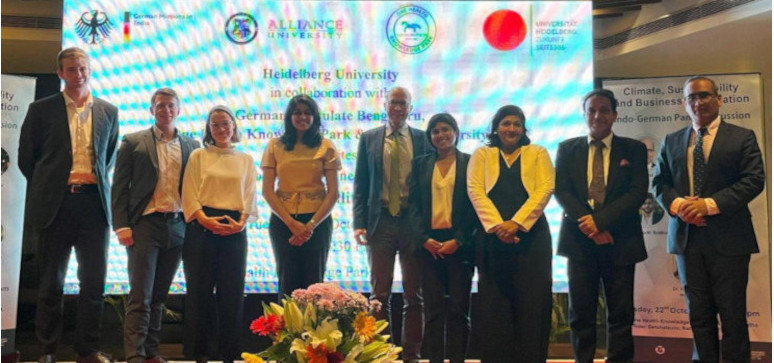
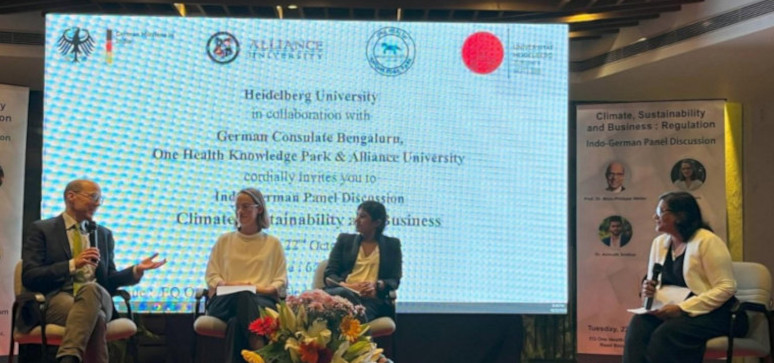
Heidelberg University, in collaboration with the German Consulate Bengaluru, One Health Knowledge Park, and Alliance University, hosted the Indo-German Panel Discussion on Climate, Sustainability, and Business. Held at Equine Biotech One Health Knowledge Park at 6:30 PM, the event brought together experts to address the challenges of climate justice and corporate responsibility in supply chains, providing perspectives from European and non-European regions.
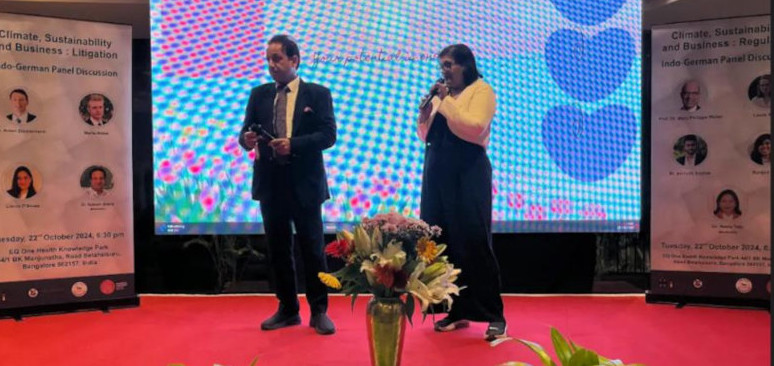
Equine Biotech One Health Knowledge Park organized the event under the leadership of Professor Utpal Tatu. Dr. Suboor Bakht and Ms. Neela Tatu convened the event and also moderated the panel discussions. The event aimed to foster dialogue among experienced lawyers, policymakers, business leaders, and academicians focusing on how regulatory frameworks and litigation can shape sustainable business practices. It highlighted the importance of international cooperation and bridging the gap between policy and practice to meet global sustainability goals.
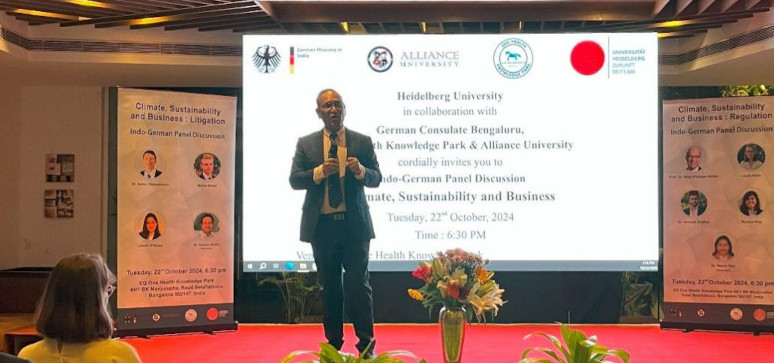 Regulation Perspectives:
The first panel, moderated by Neela Tatu, centered on regulatory frameworks for corporate sustainability, particularly in Europe, and their impact on businesses. It addressed how companies can align with sustainability requirements while remaining economically viable.
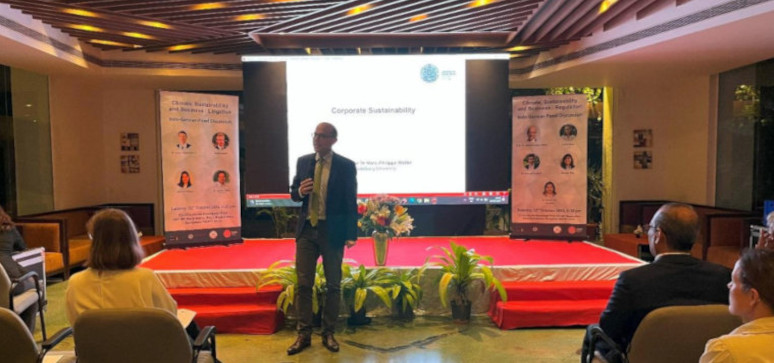
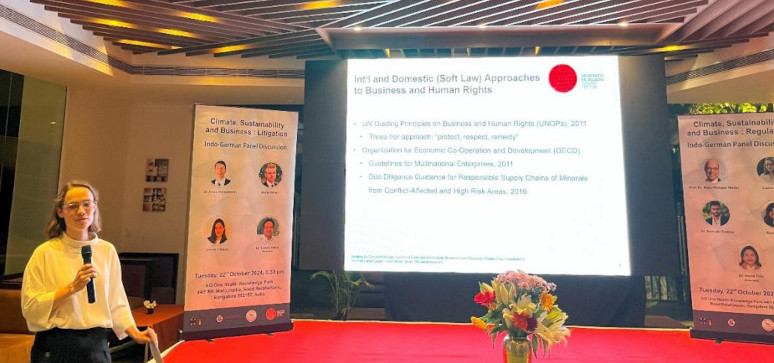
Professor Dr. Marc-Philippe Weller opened the panel by discussing Corporate Sustainability, emphasizing the dual importance of ecological and social sustainability. He urged businesses to integrate sustainable practices throughout their supply chains.
Next, Dr. Laura Korn discussed Corporate Supply Chain Regulation in Germany and Europe, focusing on laws such as the German Supply Chain Due Diligence Act, which holds companies accountable for environmental and human rights violations. Korn highlighted how transparency in operations is becoming critical for businesses.
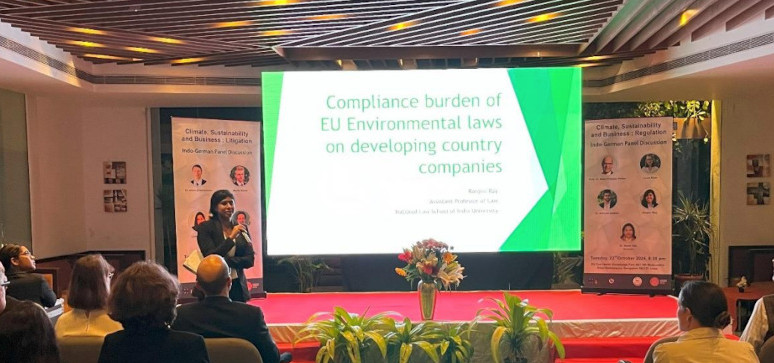
Dr. Ronjini Ray concluded the session by addressing the compliance challenges for companies in developing countries. She explained that while EU regulations are essential for sustainability, they burden companies with limited resources heavily. Ray stressed the need for capacity-building efforts to help businesses meet these requirements without compromising their growth. Following the presentations, moderator Neela Tatu facilitated a Q&A session, inviting audience questions on the feasibility of compliance and the potential risks of over-regulation on smaller businesses.
Dr. Lena Robra, Head of Academic Affairs at the Swissnex office asked questions related to the relevance of net negative as against net zero carbon footprint to Prof Weller. Also, Dr. Sukumar, Vice President, of the Inter-Governmental Panel for Climate Change made a productive comment on his presentation.
 Litigation Perspectives
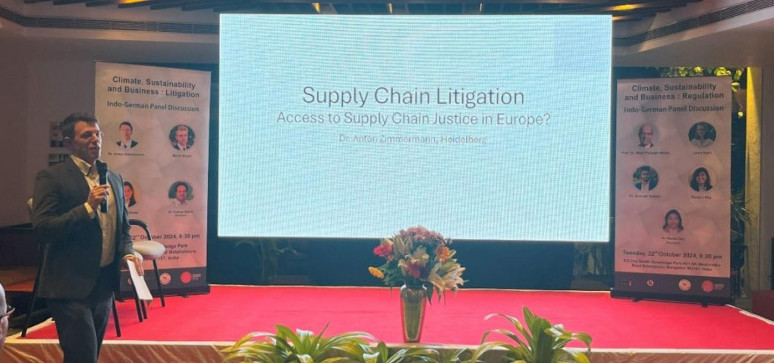
The second panel, moderated by Dr. Suboor Bakht, examined litigation as a tool to promote corporate accountability and climate justice. Dr. Anton Zimmermann explored the complexities of Supply Chain Litigation, highlighting how legal barriers, such as jurisdictional issues, can limit access to justice for affected communities, particularly in developing countries. He called for stronger legal frameworks to support fair access to justice.
Dr. Moritz Böbel expanded on litigation trends in the EU and beyond, focusing on legal pathways to a sustainable future, and how recent directives empower activists and stakeholders to pursue legal action against non-compliant companies.
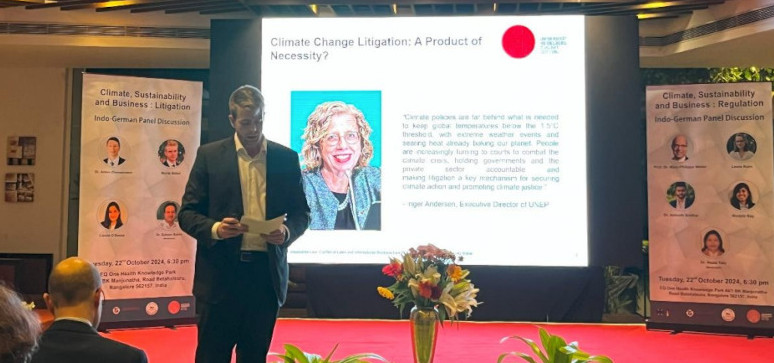
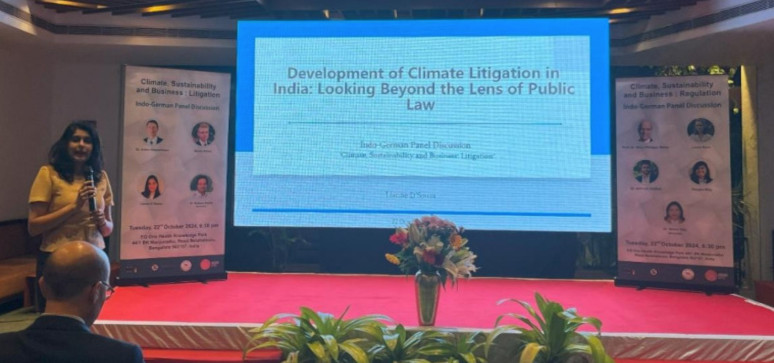
The final speaker, Dr. Lianne D’Souza, discussed climate litigation in India. She emphasized the importance of moving beyond public law frameworks and using private law to hold corporations accountable for environmental harm. D’Souza underscored the need for innovative legal solutions to address climate challenges in India. The session ended with a lively Q&A segment, moderated by Suboor Bhakt, where panelists addressed questions on cross-border litigation and how businesses can mitigate legal risks related to sustainability.
 Conclusion and Networking Dinner
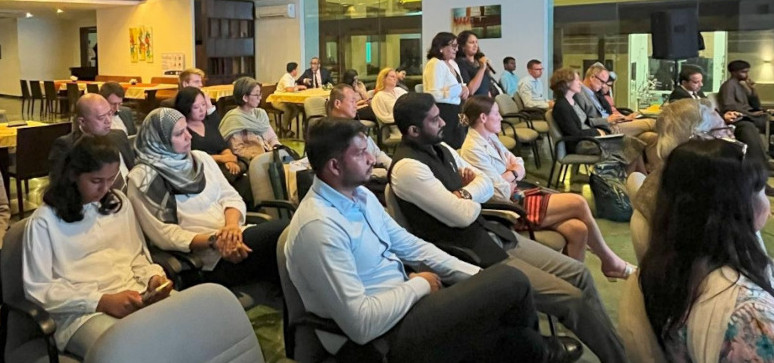
The event concluded with a networking dinner, providing attendees the opportunity to exchange ideas and build connections. Conversations revolved around the importance of international collaboration and the challenges of balancing profitability with sustainability goals.
 Key Takeaways
The Indo-German Panel Discussion effectively highlighted the interplay between policy, regulation, and litigation in promoting corporate responsibility. It emphasized the need to balance regulatory requirements with economic feasibility, particularly for businesses in developing regions. The event also underscored the importance of accessible legal frameworks to ensure justice for affected communities. As sustainability becomes a central issue for businesses globally, the event reinforced the need for collaboration across regions to develop effective solutions. Ultimately, such discussions play a crucial role in shaping the future of sustainable business practices, fostering partnerships, and advancing climate goals.