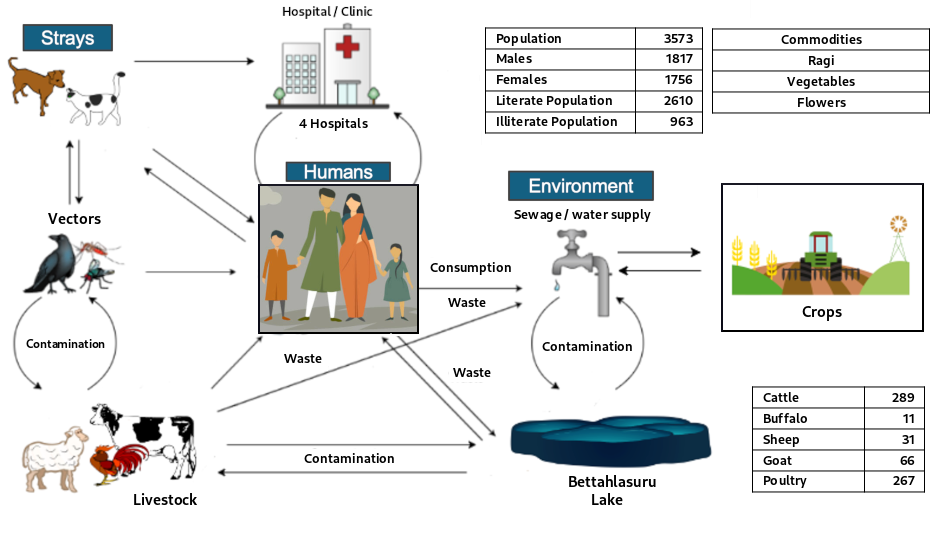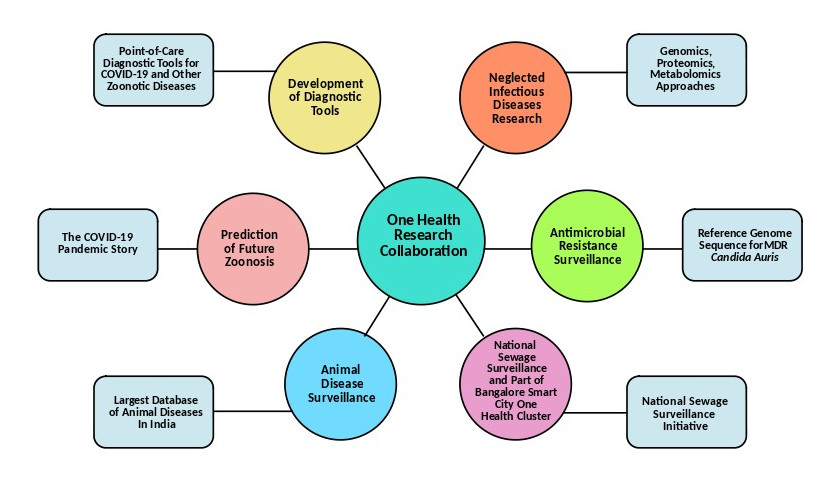
Our mission is to develop a scalable model for healthier rural communities by working with mid-sized villages that rely on poultry farming, livestock, and agriculture. We monitor key health indicators across a population of around 5,500 individuals through primary health centers, 700 – 1,000 cattle via the veterinary health department, and around 550 stray animals, including dogs and cats, through our dedicated programs. By assessing water, soil, and air quality, we aim to identify and mitigate risks related to both communicable and non-communicable diseases.
 By integrating science-driven insights with local health initiatives, we strive to create a model that can be replicated across villages in India and beyond - paving the way for healthier communities and a more sustainable future.
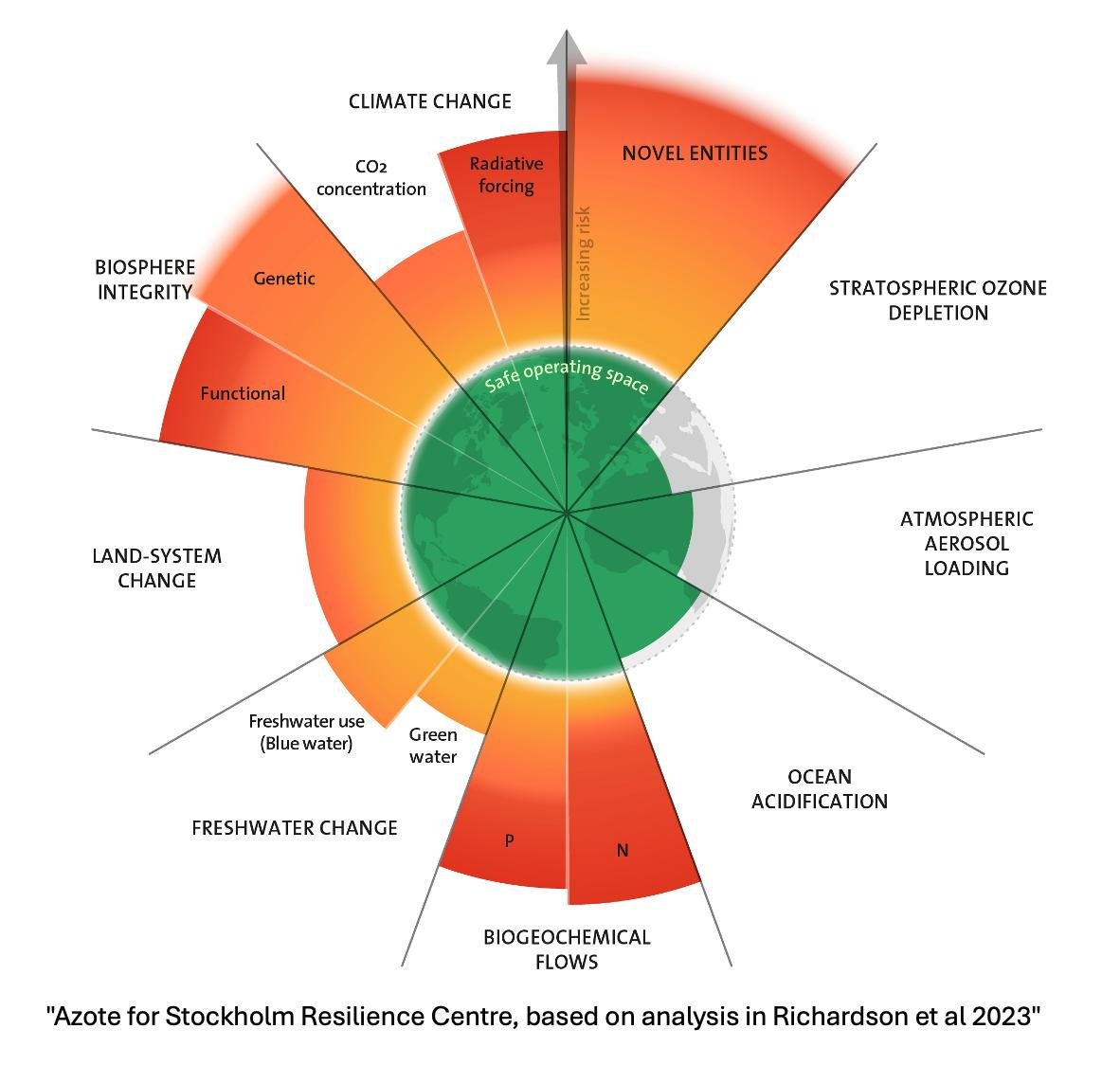
Planetary boundaries are a scientific framework developed by Johan Rockström, Will Steffen, and an international team of researchers. Introduced in a Nature paper (2009), it identifies key Earth system processes, such as climate change, biodiversity loss, and freshwater use that regulate planetary stability. These boundaries define the safe environmental limits within which humanity can operate without risking irreversible damage. Unfortunately, several boundaries, including climate change and biosphere integrity, have already been breached. Led by the Stockholm Resilience Centre, this framework highlights the urgent need for global action to restore balance. It serves as a critical guide for sustainable development, aiming to safeguard the planet’s future. By respecting these boundaries, humanity can work toward a safer and more resilient Earth.