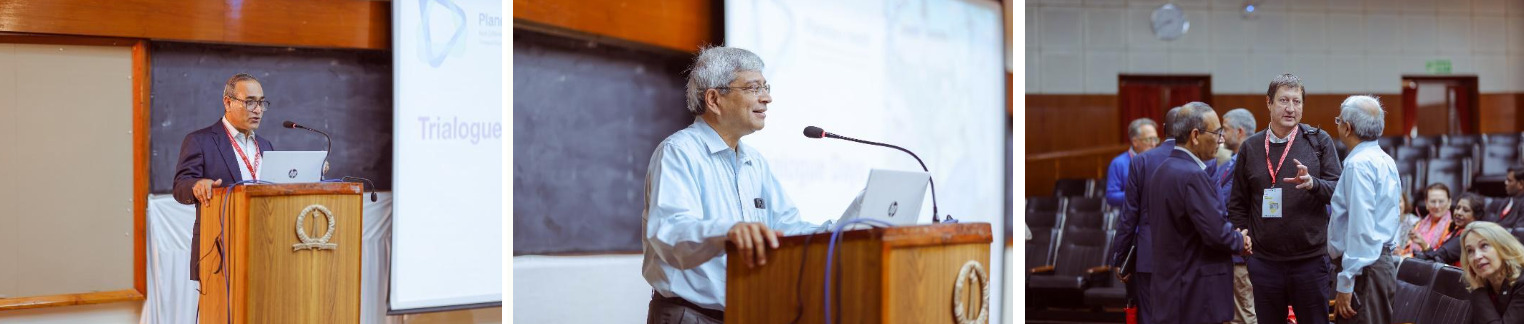
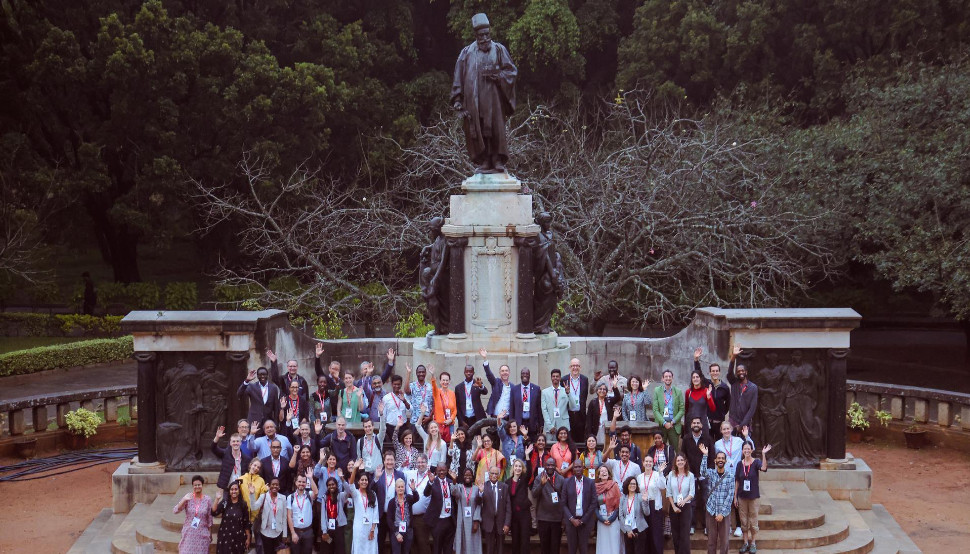
Field Visit: One Health Village
Prof. Tatu, known for his interdisciplinary research, recognised that the traditional academic discourse on planetary health often overlooks the nuanced realities of rural communities. His lab has been developing a holistic "One Health Village" framework at a village in north Bengaluru (Bettahalasuru) that considers the interconnectedness of human, animal, and environmental health - a perspective that became the cornerstone of this expedition.
On a rainy Sunday afternoon, 1
st December 2024, a diverse group of international researchers assembled at the IISc Main Guest House. Participants from Uganda, Switzerland, and various parts of India - including scientists, public health experts, veterinarians, and policymakers - prepared for a 60 minute bus journey that promised to challenge their existing perceptions of planetary health.
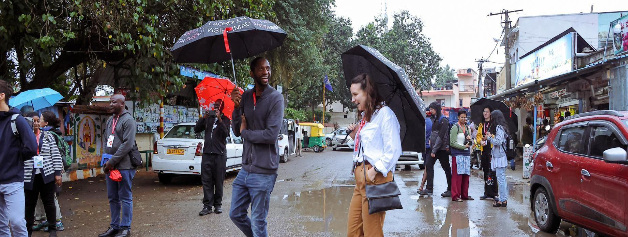
Delegates reaching the venue on a wet afternoon
The selection of Bettahalasuru was deliberate. This rural setting would serve as a living laboratory, offering insights into the complex interactions between human settlements, agricultural practices, animal husbandry, and healthcare infrastructure.
The delegations examined specific aspects of the village ecosystem:
Researchers systematically documented the living conditions of livestock, understanding how animal health directly correlates with human and environmental well-being. The poultry and pig farms became critical sites of investigation, revealing the delicate balance between agricultural practices and ecological sustainability.
1.
Healthcare Infrastructure: The village's primary health center became a focal point of discussion. Participants critically examined the accessibility of medical resources, vaccination issues, and the challenges of pharmaceutical and antimicrobial management in a resource-constrained setting.
2.
Community Interaction: Unlike traditional research methodologies, this expedition emphasized dialogue and mutual learning. Village residents were not mere subjects but active participants, sharing their lived experiences, traditional knowledge, and perspectives on health and environmental challenges.
The day was structured to break down traditional academic silos. A veterinarian might find herself in conversation with a climate scientist, while a public health expert discusses infrastructure challenges with a local community leader. This cross-pollination of ideas was a deliberate strategy employed by Dr. Tatu's team to foster holistic understanding.
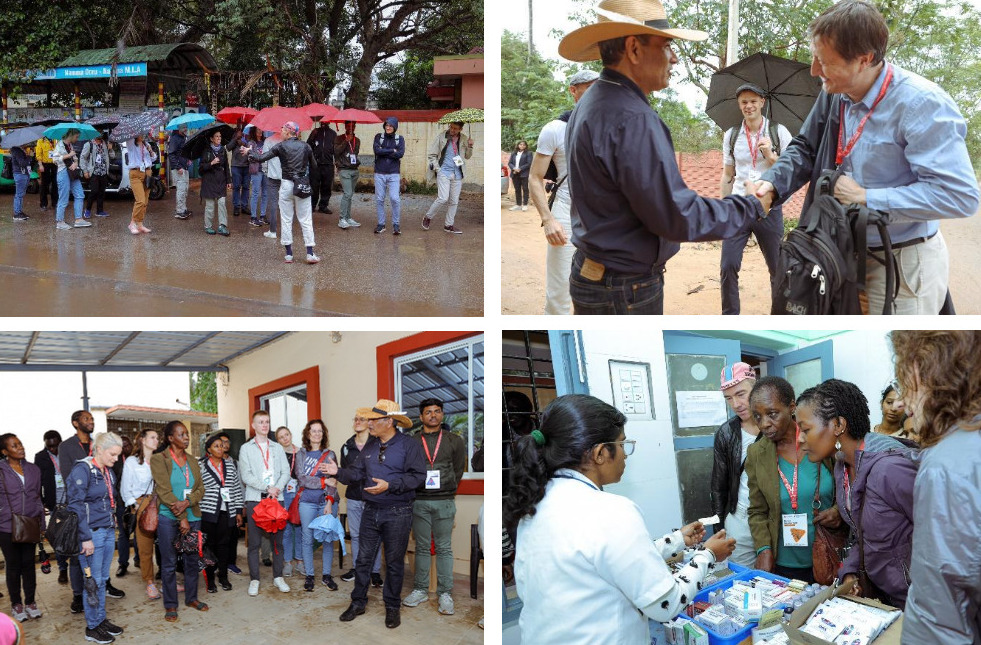
Delegates at the village
The scientific exploration was beautifully complemented by a cultural experience. Classical singer Bindhu Malini's performance of Carnatic and Hindustani songs about community, earth, and unity transformed the evening into a profound reflection on human interconnectedness. A traditional Kannadiga meal provided both sustenance and a sensory connection to the local context.
This wasn't merely a field visit—it was a pioneering approach to planetary health research. By situating global conversations in a specific local context, Dr. Tatu's team demonstrated that meaningful solutions emerge from ground-level understanding.
The Bettahalasuru expedition embodied several key principles:
1. Systems thinking approach
2. Critical self-reflection
3. Collaborative learning
4. Interdisciplinary dialogue
Nature itself seemed to underscore the conference's themes of environmental volatility. Unseasonal rains persisted throughout the four days, providing a stark, real-time demonstration of climate change's unpredictable impacts. Yet, in a powerful testament to the resilience discussed in their sessions, the participants remained undeterred, carrying forward their ambitious agenda with unwavering determination.
The conference wasn't just a discussion about planetary health—it was a live demonstration of sustainable practices:
1. Dietary Choices: Only vegetarian meals were served, reducing the ecological footprint of food consumption.
2. Zero Plastic Policy: Eliminating single-use plastics to minimise environmental waste.
3. Sustainable Transportation: Exclusive use of electric vehicles and bicycles, minimizing carbon emissions.
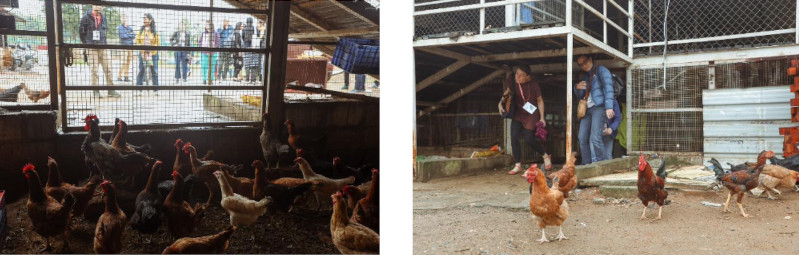
Delegates at the local farms
These choices were not mere conveniences but intentional decisions that aligned with the conference's core principles of holistic environmental stewardship. The Bettahalasuru visit was more than an academic exercise; it was a microcosm of how global challenges can be approached with local wisdom, interdisciplinary collaboration, and a genuine commitment to understanding complex ecological systems.
Topics Covered in the Meeting
The conference addressed a comprehensive range of planetary health topics:
1. One Health, Global Health, and Planetary Health
2. Impact of Rising Temperatures
3. Air Quality and Health Implications
4. Water Security and Health
5. Zoonotic Diseases and Spillovers
6. Global Mobility and Migration
7. Antimicrobial Resistance
8. Resilient Health Systems
9. Education and New Technologies
10. Strategies for Decarbonisation
Sustainability Practices
The conference embodied its planetary health principles through:
● Exclusively vegetarian menu
● Strict no-plastic policy
● Using only electric vehicles and bicycles for transportation
● Minimising environmental impact in all conference activities
Collaborative Opportunities
The final day was strategically designed to foster potential collaborations, featuring workshops for participants to:
● Connect with potential research partners
● Explore collaborative opportunities in critical areas, such as:
○ Antimicrobial Resistance (AMR)
○ Infectious Diseases
○ Global Health Strategies
Conclusions and Future Directions
The Trialogue Days, spearheaded by Dr. Utpal Tatu's lab, represented a groundbreaking approach to addressing planetary health challenges. By bringing together diverse perspectives and providing a platform for interdisciplinary dialogue, the conference:
● Challenged existing paradigms of global health understanding
● Created networks for future collaborative research
● Demonstrated the importance of holistic, integrated approaches to planetary health A unique outcome was the planned illustrated book on planetary health, which would capture public questions and expert insights from Switzerland, Uganda, and India
The conference succeeded in:
● Breaking down disciplinary silos
● Encouraging critical thinking about global health challenges
● Providing a model for future interdisciplinary scientific gatherings
● Highlighting the crucial role of collaborative, international research in addressing planetary health issues
The Trialogue Days marked a significant milestone in the global conversation about planetary health, setting new standards for collaborative scientific inquiry and problem-solving. These sessions represented more than networking - they were seeds of future global research initiatives that could address some of the most pressing planetary health challenges.
| Visit the Gallery section to see
more photos |